
Small Call to Action Headline
And A Second Line Of Text Here
Explore our blog...

Bariatric Nutrition Advice from Australian Dietitians
YOUR GO-TO FOR INSIGHTS INTO NUTRITION FOR GASTRIC SLEEVE AND GASTRIC BYPASS, BARIATRIC RECIPES, PROTEIN, SUPPLEMENTS, WEIGHT REGAIN, MEAL PLANNING AND GLP-1 MEDICATIONS.

Vitamins After Bariatric Surgery: What to Take (and What Most People Miss Before Blood Tests)
Vitamins are a non-negotiable part of life after weight loss surgery. Whether you have had a sleeve gastrectomy or gastric bypass, your body is working with less food and altered digestion and absorption. This means your risk of nutrient deficiencies is much higher - even when you’re eating well.
But there are a few parts that often cause confusion:
what vitamins should you be taking
what blood tests do you need
does the timing of your vitamins affect these blood test results?
Let’s unpack these.
WHY VITAMINS MATTER AFTER BARIATRIC SURGERY
After bariatric surgery, your body is working with:
less food
altered digestion
reduced absorption of key nutrients.
This is especially true for nutrients like iron, vitamin B12, calcium and fat-soluble vitamins.
You can be doing everything “right” with your eating and still fall short.
And importantly, deficiencies are far easier (and far nicer) to prevent than they are to correct.
Once levels drop, bringing them back up can take time, and often additional supplementation on top of your usual routine, as well as the unwanted symptoms deficiencies can bring, such as fatigue, hair thinning, dizziness or changes in mood.
That’s why supplementation isn’t optional for bariatric surgery patients.
It is important to follow the vitamin regime recommended by your surgical or dietetic team, as this is usually tailored to your procedure and individual needs.
In most cases, this includes a bariatric multivitamin as your foundation (such as BN or Fit For Me), with additional calcium (preferably calcium citrate) and vitamin D, and often vitamin B12 and iron as well.
When this is in place, the right vitamin regime acts like an insurance policy for your long-term health.

WHY WE DON'T RECOMMEND STANDARD SUPERMARKET MULTIVITAMINS
We are often asked, “Can’t I just take something from the pharmacy or supermarket?”
Short answer - not usually.
And no, we don’t have shares in bariatric vitamin companies. But we do have access to the evidence, and we care about your long-term health.
Here’s what we see in practice with post bariatric surgery patients:
Many standard multivitamins are too low in key nutrients like iron and vitamin B12.
Some don’t include the nutrients that you are most at risk of deficiency.
Others contain high amounts of things you don’t need (hello B6!).
It’s not just about taking a vitamin.
It’s about taking the right one for your body after gastric bypass or sleeve gastrectomy.
This is why we recommend bariatric-specific formulations that are designed to meet your needs.
If you’re not sure where to start, we stock a small, curated range including:
chewable bariatric multivitamins
capsule bariatric multivitamins
chewable calcium citrate.
You can explore these in our Online Store.
WHAT ARE THE BEST VITAMINS AFTER WEIGHT LOSS SURGERY?
The “best” vitamin isn’t about brand.
It comes down to whether it:
meets bariatric-specific nutrient requirements
is in a form you can tolerate (chewable or capsule)
is something you can take consistently long term.
In most cases, this is where bariatric-specific supplements come in.
WHY WE MONITOR YOUR BLOOD TESTS AFTER BARIATRIC SURGERY
Blood tests aren’t just a routine box to tick.
They tell us whether your current vitamin and mineral supplements are:
meeting your needs
missing the mark
or need adjusting.
They also give us reassurance that what you’re doing is working - not a reason to stop, even if everything is on track.
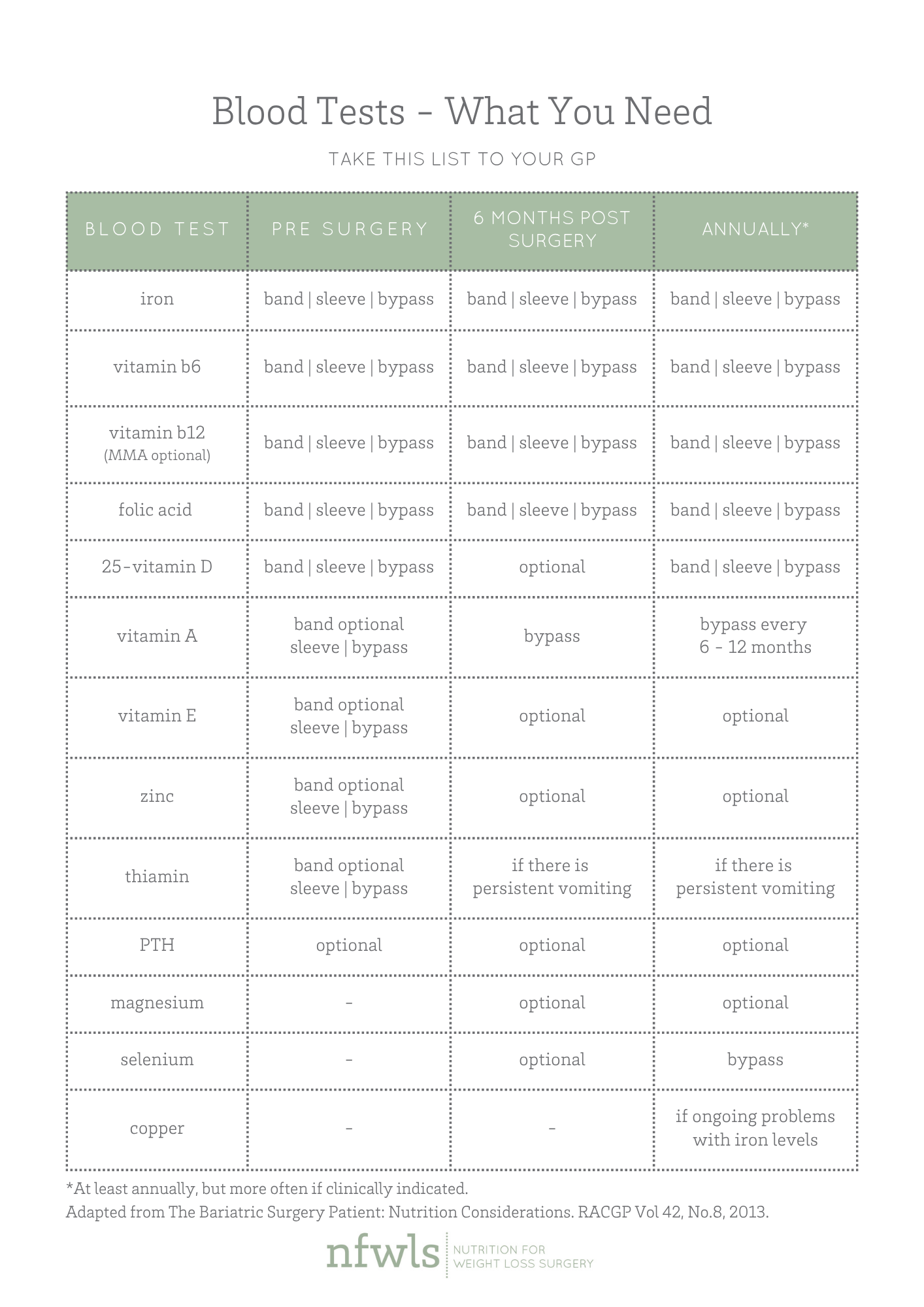
It’s also worth remembering that one set of “good” blood results doesn’t mean you’re in the clear long term.
Deficiencies can develop over time, especially if supplementation becomes inconsistent or drops off.
We don’t want a good set of labs to create a false sense of security - we want it to reinforce that your current plan is working and worth continuing.
CAN VITAMINS AFFECT BLOOD TEST RESULTS?
Yes - they can.
Vitamins and mineral supplements can influence blood test results in two main ways:
They can temporarily raise levels in your blood. If you’ve taken your supplements shortly before your test, levels may look higher than they actually are long term.
They can interfere with how tests are measured. Some vitamins can affect the way certain lab tests (called assays) work, leading to results that appear falsely high or low.
A well-known example is biotin (vitamin B7), which is included in most bariatric multivitamins.
In higher amounts, biotin can:
skew thyroid test results
interfere with cardiac markers like troponin
You’ll often see biotin marketed in high doses in hair, skin and nail supplements. These are not something we recommend after bariatric surgery, as they:
duplicate what’s already in your bariatric multivitamin
can exceed safe upper limits
may cause more harm than good long term.
Other nutrients can also impact results in different ways, including folic acid and vitamin C.
If you want to read more about how this works, you can check out one article here and another article here that explain this topic well.
WHAT TO DO BEFORE YOUR BLOOD TEST
To help get the most accurate results, we generally recommend pausing your vitamin and mineral supplements for 48 hours prior to your blood test.
This helps give a clearer picture of your baseline levels, rather than what has recently been supplemented.
It also reduces the risk of interference with certain tests.
From a practical point of view, we consider the benefit of holding supplements for a short period to outweigh any potential risk for most people.
That said, if your surgical or medical team has given you specific instructions, always follow their advice.
The bottom line for bariatric surgery patients is that:
bariatric vitamins are essential after weight loss surgery
not all supplements are created equal
blood tests guide your plan and good results are a reason to continue, not stop taking supplements
pausing supplements short term can improve accuracy.
It’s not about doing more.
It’s about doing the right things, at the right time, for your body.
If you need help with your supplement plan, head to our Support Options, ask yourself a few quick questions, and we’ll point you to the option that’s the best fit for your journey right now.
We look forward to helping you get the very best outcome you deserve.

"I just wanted to thank you both for the blog posts and emails I have been receiving. With just two weeks until my gastric bypass, the timing of this was perfect and your information has answered many of my questions. Thank you!"
PAM | WEIGHT LOSS SURGERY PATIENT