
Small Call to Action Headline
And A Second Line Of Text Here
Explore our blog...

Bariatric Nutrition Advice from Australian Dietitians
YOUR GO-TO FOR INSIGHTS INTO NUTRITION FOR GASTRIC SLEEVE AND GASTRIC BYPASS, BARIATRIC RECIPES, PROTEIN, SUPPLEMENTS, WEIGHT REGAIN, MEAL PLANNING AND GLP-1 MEDICATIONS.

How Many Calories Should I Eat After Bariatric Surgery?
The question, “How many calories should I eat after a sleeve gastrectomy or gastric bypass?”, sounds like it should have a simple answer.
The tricky part is that there isn't one calorie target that is right for everyone after bariatric surgery.
As a general guide, most people will eat somewhere between 800 and 1800 calories per day, although some people will need more than this, particularly longer term. Your needs will change depending on how far you are from bariatric surgery, your body size, activity, appetite, restriction, health, medications, protein and nutrient needs, and whether you are currently losing, gaining or maintaining weight.
It is important to know that needing more calories isn't a sign that you have failed or are eating too much.
You do not need to stay on 800, 1000 or 1200 calories forever because you have had bariatric surgery. Some of our most successful long-term clients don't count calories at all.
At Nutrition for Weight Loss Surgery, we prefer a food-first approach. We want to know whether you are eating enough, meeting your protein target, eating satisfying meals and following the eating behaviours that support you after bariatric surgery before we start worrying about a specific number of calories.
Calories can be useful. But they are only one piece of the puzzle.
So before you open MyFitnessPal and start trying to work out whether your target should be 800, 1200 or 1600 calories, let's look at when calories matter - and when focusing on them can do more harm than good.
DO I NEED TO COUNT CALORIES AFTER BARIATRIC SURGERY?
No.
If you are eating well, prioritising protein, eating balanced meals, responding to your hunger and satiety cues and progressing in line with your goals, there is absolutely no reason to track your calorie intake.
For many people, not tracking calories is a very deliberate choice.
After years of dieting before bariatric surgery, returning to counting every calorie can feel like going straight back into diet mode. For some people it creates unnecessary stress; for others it can trigger restriction or encourage them to ignore their body's hunger and satiety cues simply because an app tells them they have reached their calorie target.
We would much rather see you build an eating pattern you can maintain long term than become dependent on a number.
There are, however, times when tracking can be useful. If your weight loss has plateaued, you have experienced weight regain, you are not sure whether you're meeting your protein target or something simply feels off, looking at your food intake for a short period can give you valuable information.
We view tracking as a problem-solving tool, not a performance review.
The aim isn't to get the lowest calorie number possible. It is to learn something useful from the information.
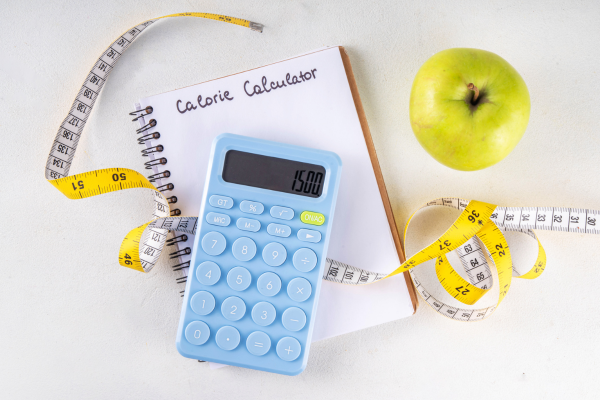
CALORIES DON'T TELL US THE WHOLE STORY
Imagine two people are both eating 1200 calories per day.
One is eating regular meals built around protein, vegetables, fruit, dairy and wholegrain foods and is meeting their protein and fibre needs.
The other is struggling to eat much at meal times, but grazing regularly throughout the day on foods that are easy to eat after bariatric surgery and provide little lasting satiety.
Their calorie intake may be identical, however their protein intake, fibre intake, overall nutrition, hunger, satiety and eating patterns could be completely different.
Calories tell us how much energy food contains. They don't tell us whether that food is helping to nourish you.
After bariatric surgery, you need to fit good nutrition into a relatively small amount of food. That makes what you eat just as important as how many calories you eat.
So before we look at calories, we start with two things that can tell us much more about the balance of your food intake: protein and carbohydrate.
START WITH YOUR PROTEIN TARGET
Protein is our number one nutrition priority following bariatric surgery.
The absolute minimum protein target following bariatric surgery is 60g of protein per day, with individual long-term protein targets typically sitting between 80 and 120g per day.
Rather than guessing where you sit within that range, use our free Bariatric Protein Calculator to calculate your individual daily protein target.
Protein helps preserve lean muscle mass during weight loss and plays an important role in satiety, so we want to make sure you are eating enough protein before we start looking at ways to reduce your overall food intake.
Once you know your protein target, we can look at another number that can tell us quite a lot about the balance of your diet: your carbohydrate intake.
HOW MUCH CARBOHYDRATE SHOULD I EAT AFTER BARIATRIC SURGERY?
We don't recommend excessive restriction of carbohydrate foods after bariatric surgery.
Many nutritious foods contain carbohydrate, including fruit, dairy, legumes and wholegrain foods. These foods can provide fibre, vitamins, minerals and other important nutrients.
What we do want is for your carbohydrate intake to be balanced with your protein intake.
As a starting point, we generally recommend keeping your total grams of carbohydrate to no more than one and a half times your protein target.
For example, if your protein target is 80g: 80g protein × 1.5 = up to 120g carbohydrate per day
If your protein target is 100g, your starting upper carbohydrate limit would be around 150g per day.
This doesn't mean you have to eat that amount of carbohydrate. It gives us a useful upper guide when looking at the overall balance of your food intake.
And this is where looking only at calories can hide some useful information.
Someone eating 1200 calories per day but getting only 50g of protein and 180g of carbohydrate gives us a very different picture from someone eating the same 1200 calories while meeting a 90g protein target and keeping their carbohydrate intake appropriately balanced.
Our first response wouldn't necessarily be to cut the 1200 calories.
We would start by improving the protein and carbohydrate balance and see what happens.
We also want to leave room for fibre-rich foods such as vegetables, fruit, legumes and wholegrain foods. These provide important nutrients and can help make your meals more satisfying.
If reducing your calories means your protein intake drops, there is little room left for fibre-rich foods and you're hungry and low in energy, a lower calorie intake isn't necessarily a better one.
HOW DO I KNOW IF I'M EATING THE RIGHT NUMBER OF CALORIES?
If you are not sure whether your current intake is right for you, this is where tracking can sometimes be helpful.
You don't need to commit to tracking every day. Recording what you genuinely eat for a few representative days - for example, two weekdays and a weekend day - can provide a useful snapshot.
Don't choose your “best” days or change how you eat because you're recording it. We want to see what is actually happening.
Then work through your intake in this order:
1. Are you meeting your individual protein target?
2. Is your carbohydrate intake less than one and a half times your protein intake?
3. What do your meals, snacks and eating patterns look like?
4. Are you including fibre-rich, nutrient-dense foods?
5. What is your overall calorie intake?
Notice that calories came last. That is deliberate.
WHAT IF I AM ONLY EATING 800 CALORIES AND NOT LOSING WEIGHT?
We consider 800 calories per day a minimum to work towards following bariatric surgery, although it can take time to reach this in the early post-operative stages.
If you are further along in your journey, already eating around 800 calories and your weight isn't moving, we don't recommend cutting your intake further. In fact, often you need to eat more to get things moving.
Constant hunger, fatigue, brain fog, low energy and rebound or binge eating can all be signs that your intake is too low.
The last thing we want is weight isn't moving → eat less → become hungry and depleted → eating becomes harder to manage → restrict again.
That is a cycle we want to avoid.
WHAT IF MY WEIGHT LOSS HAS STOPPED?
A plateau doesn't automatically mean you're eating too many calories. Weight loss after bariatric surgery is not linear. It will slow over time and eventually your body will settle at a more stable weight.
It is also normal to regain a small amount from your absolute lowest post-surgery weight.
Before deciding that you need to eat less, it is worth asking another question: is further weight loss necessary and realistic for my body?
The Australian and New Zealand Bariatric Surgery Registry has collected long-term outcome data from more than 178,000 bariatric surgery patients. Across this data, average weight loss following bariatric surgery is approximately 30% of starting body weight.
That doesn't mean you can't lose more than 30%, or that 30% should be everyone's goal. It gives us useful context when deciding whether a plateau genuinely needs fixing or whether your body may be settling around a weight it can realistically maintain.
Someone who has already lost around 30% of their starting body weight and is trying to force further weight loss may need a very different approach from someone who has experienced significant weight regain alongside changes to their eating patterns.
The answer isn't always fewer calories.

WHAT IF I HAVE REGAINED WEIGHT AFTER BARIATRIC SURGERY?
If weight regain is the reason you searched for a calorie target, resist the temptation to immediately put yourself back onto a very low-calorie diet. Weight regain can be influenced by changes in eating patterns, food choices, activity, appetite and satiety, health, medications and simply being further out from surgery. Finding out what has changed gives you something useful to work with. Simply deciding to “go back to 1200 calories” doesn't.
HAS YOUR WEIGHT STARTED CREEPING BACK UP?
Before you slash your calories or put yourself back on another restrictive diet, check out our our free Halt the Weight Regain Train workshop.
In this hour-long, practical workshop, we take you through some of the common reasons weight can creep back on after bariatric surgery and help you work out where to focus first.
Save your free seat for our Halt the Weight Regain Train workshop here.
WHAT IF I WANT SOME STRUCTURE WITHOUT COUNTING CALORIES?
You don't need to log every meal in an app to have some structure around your food intake. Our Weight Loss Surgery Meal Plans eBook includes plans ranging from 800 to 1800 calories per day. Each calorie level has been designed around an appropriate balance of protein, carbohydrate and fat. The calorie levels are there to give you options - not a ladder you are supposed to climb down.
You can choose a plan that best matches your protein needs, appetite and stage of your journey. And if you need more food than our highest calorie plan provides, that doesn't mean you're doing anything wrong.
Because we've already done the nutrition calculations, our meal plans can also be useful if you would prefer to focus on food rather than entering everything you eat into an app.
You will also get our bonus training video to show you how to customise the meal plans to you!
SO, HOW MANY CALORIES SHOULD YOU EAT AFTER BARIATRIC SURGERY?
For many people, 800 to 1800 calories per day falls within the broad range we commonly see after a sleeve gastrectomy or gastric bypass. Some people will need more.
But there is no gold star for eating 800 calories, no failure in needing 1500, 1800 or more, and no requirement to count calories at all.
If tracking helps you answer a question, use it. If you're eating well, meeting your nutrition needs and achieving an appropriate, sustainable outcome without tracking, there may be absolutely no reason to start.
Use the numbers to learn something about your eating, not to see how low you can make them.

"I just wanted to thank you both for the blog posts and emails I have been receiving. With just two weeks until my gastric bypass, the timing of this was perfect and your information has answered many of my questions. Thank you!"
PAM | WEIGHT LOSS SURGERY PATIENT